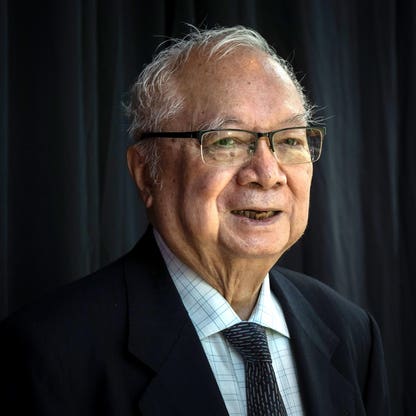
Hong Kong Tycoon Gordon Wu: What the Richest Lists Don't Say
In the glittering pantheon of Hong Kong’s wealthiest, names like Li Ka-shing, Lee Shau-kee, and the Kwok family often dominate the headlines and the top spots on global rich lists. Yet, beneath the surface of these widely publicised figures lies a fascinating narrative about wealth, influence, and strategic genius that often escapes the simplistic quantification of an annual billionaire ranking. One such narrative belongs to Sir Gordon Wu Ying-sheung, a titan of infrastructure and property development whose true financial standing and impact are far more nuanced than what a quick search for "gordon wu net worth" might reveal.
The very absence of Gordon Wu's name on many readily available "richest lists" is, paradoxically, a testament to his unique approach to business and wealth management. While sources like Forbes and Wikipedia meticulously track the fortunes of hundreds of billionaires, the opaque nature of private holdings, strategic privatisations, and long-term infrastructure investments means that an accurate, real-time assessment of *gordon wu net worth* often remains an intricate puzzle, largely invisible to external observers. This article delves into the layers behind the numbers, exploring why Sir Gordon Wu's wealth defies easy categorisation and what his journey tells us about true influence in Asia.
The Enigma of Gordon Wu's Net Worth: Beyond Public Valuations
Gordon Wu's business empire, most notably through Hopewell Holdings, has always been characterised by its pioneering spirit and a focus on large-scale, often politically complex, infrastructure projects that span decades. Unlike tech moguls whose wealth can skyrocket and plummet with public stock valuations, Wu’s fortune has been built on tangible assets: bridges, highways, power plants, and vast property developments. This fundamental difference makes his wealth inherently less liquid and, consequently, harder for external lists to track with precision.
Deconstructing Hopewell's Privatisation
One of the most significant events impacting the visibility of *gordon wu net worth* was the privatisation of Hopewell Holdings in 2019. This monumental deal, valued at approximately US$2.7 billion, saw Wu and his family take the company private, delisting it from the Hong Kong Stock Exchange. The move effectively removed a substantial portion of his wealth from public scrutiny, making it significantly more challenging for wealth trackers to estimate his net worth based on publicly traded assets.
The privatisation wasn't merely a financial transaction; it was a strategic masterstroke that allowed Wu to:
- Streamline Operations: Focus on core infrastructure and property development without the pressures of quarterly earnings reports and public market expectations.
- Unlock Hidden Value: The public market often undervalues companies with long-gestation infrastructure projects. Privatisation allowed the family to realise the full potential of these assets over the long term.
- Enhance Control: Regain full control over strategic decisions, facilitating faster and more agile responses to market changes and new opportunities.
This strategic move solidified the family's control over vast, capital-intensive projects that continue to generate substantial, albeit private, revenue streams. For a deeper dive into this pivotal event, you can explore
Gordon Wu's $2.7 Billion Hopewell Privatisation Explored.
Influence Over Illiquid Assets: A Different Kind of Wealth
While traditional rich lists focus on liquid assets and publicly traded shares, Gordon Wu's true financial power lies in his ownership and development of critical infrastructure that underpins entire regions. His portfolio includes projects like the Guangzhou-Shenzhen Superhighway and power plants in China, which are not merely investments but vital arteries of economic growth. The value of these assets is immense, but they are illiquid and not easily translated into a daily fluctuating stock price.
Consider the ongoing revenue streams from tolls, energy sales, and property leases generated by these colossal projects. These represent consistent, long-term wealth generation that is often overlooked in snapshot assessments of *gordon wu net worth*. His vision for connecting Hong Kong to mainland China through infrastructure, long before others saw the potential, positioned him as a pioneer. This long-term, patient capital approach contrasts sharply with the often short-term focus of public markets, making it difficult for external lists to capture the full scope of his financial might.
Gordon Wu's Enduring Legacy and Impact
Gordon Wu’s impact extends far beyond the financial balance sheet. He is renowned for his pragmatic approach, his engineering prowess, and his ability to navigate complex political landscapes to bring ambitious projects to fruition. His influence on Hong Kong's development and its integration with the Greater Bay Area is indelible. From shaping the urban landscape to laying down the vital transportation links, his projects have literally built the pathways for economic prosperity.
His legacy is not just about accumulating wealth, but about creating it for others and for society. He has been a vocal proponent of infrastructure development as a catalyst for economic growth and has often shared his insights on urban planning and regional integration. This level of influence and long-term value creation is a form of wealth that no dollar figure can fully encapsulate. To understand the breadth of his enduring impact, particularly on the city's property landscape, read
Decoding Gordon Wu's Influence: From Hopewell to HK Property.
What Richest Lists Often Miss: Lessons from Wu
The story of Gordon Wu offers several crucial lessons about wealth, entrepreneurship, and the limitations of conventional financial metrics:
- Long-Term Vision Trumps Short-Term Gains: Wu’s commitment to projects with multi-decade timelines highlights the power of patience and strategic foresight. His wealth is a result of consistent, long-term value creation, not speculative ventures.
- Value in Tangible Assets: While tech fortunes grab headlines, Wu's empire underscores the enduring value of hard assets – infrastructure and property – that generate consistent returns and serve fundamental societal needs.
- Influence Beyond Liquidity: True influence and economic power are not always reflected in liquid, publicly traded assets. Control over critical infrastructure and strategic private holdings can wield immense, albeit less visible, financial clout.
- The Power of Privatisation: For mature companies with significant assets, going private can be a strategic move to unlock value, reduce public scrutiny, and enable long-term planning free from market pressures.
Aspiring entrepreneurs and investors can learn from Wu's emphasis on identifying fundamental needs (like transportation and energy), executing large-scale solutions, and maintaining a steadfast commitment to projects that shape the future. His approach is a powerful reminder that not all wealth is created or measured equally.
Conclusion: Redefining Riches Through Wu's Lens
Gordon Wu's story reminds us that "net worth" is a multifaceted concept, especially for titans of industry whose empires are built on complex, long-term projects rather than publicly traded shares alone. While traditional richest lists serve a purpose, they often fall short in capturing the full scope of wealth, influence, and strategic genius embodied by figures like Sir Gordon Wu. His strategic privatisation of Hopewell Holdings further cemented his wealth within a private sphere, making an exact "gordon wu net worth" figure an elusive number for public record. Yet, his monumental contributions to infrastructure and property development in Hong Kong and mainland China speak volumes about a legacy of creating value that transcends mere monetary estimation. His is a wealth measured not just in dollars, but in the bridges built, the roads paved, and the urban landscapes transformed.